


What Work Truck Week 2026 Revealed About the Future of Work Trucks

What Work Truck Week 2026 Revealed About the Future of Work Trucks
Work Truck Week 2026 made one thing clear: the commercial vehicle industry isn’t just evolving, it’s becoming more intentional.
Across the show floor, new vehicle platforms, upfitting solutions, and technology announcements all pointed toward a common goal: helping fleets and businesses operate more efficiently, make smarter purchasing decisions, and adapt to changing demands without overextending.
Here’s a closer look at some of the key releases and what they mean for businesses looking to invest in work-ready vehicles.
New Platforms Focus on Real-World Use
One of the clearest takeaways from Work Truck Week 2026 was that innovation is happening across both traditional and emerging platforms.
Mack Trucks showcased its newly redesigned Granite model, reinforcing that diesel-powered trucks continue to play a critical role in the commercial space. With a wider cab, updated safety features, and improved driver comfort, the Granite reflects ongoing investment in proven platforms, while still integrating modern upgrades that support today’s drivers and operations.
At the same time, Harbinger introduced its HC Series cab-over platform, designed specifically for medium-duty electric applications. The platform emphasizes durability, range, and serviceability, key factors for vehicles expected to perform in real-world, full-day use.
Together, these announcements highlight a broader shift in the industry. EV development continues to move forward, but the focus has become more practical. For fleets and businesses, the conversation is less about adoption for its own sake and more about whether a vehicle, electric or diesel, can reliably get the job done.
More Options = More Flexibility for Buyers
Flexibility was another major theme throughout the show.
Ram Professional announced the return of the ProMaster City, giving businesses another compact van option for urban delivery, service, and trade applications. For many fleets, having the right-sized vehicle can be just as important as having the most capable one.
On the more specialized side, Acela Truck Company introduced its Jeep Gladiator-based Dispatcher 4x4, offering a compact, off-road-ready solution for industries that operate in hard-to-reach environments. It’s a reminder that not every job calls for a full-size truck - sometimes maneuverability and access matter more.
A Renewed Focus on the End User
Another notable announcement came from The Knapheide Manufacturing Company with the launch of its “America’s Work Truck” initiative, an effort centered around delivering dependable, purpose-built solutions for the people who rely on their vehicles every day.
At a time when the industry is evolving quickly, Knapheide’s message was clear: reliability, usability, and real-world performance still matter. As one of the few privately held companies in the space, Knapheide continues to emphasize a long-term commitment to the end user, focusing on building products that support how work actually gets done.
This initiative reinforces a broader theme seen throughout Work Truck Week 2026: innovation isn’t just about what’s new, it’s about what works. That same focus on the end user also shows up in how Knapheide approaches upfitting, designing bodies and configurations that are built around real workflows, not just specifications.
Upfitting is a Core Buying Decision
While chassis announcements tend to get the headlines, Work Truck Week 2026 made it clear that upfitting is where real-world productivity is won or lost.
Companies like Reading Truck and Sortimo didn’t just showcase new products, they highlighted how vehicles are being built around actual jobsite needs.
Reading Truck: Blending Capability with Versatility
Reading Truck introduced several new body designs, with one of the most notable being its Combo Body, a hybrid solution that combines the enclosed storage of a traditional service body with the open functionality of a platform body. 
For fleets, that means:
- Secure, lockable compartments for tools
- An open rear platform for hauling equipment or materials
- Greater flexibility across multiple job types with a single vehicle
The design also includes practical, job-focused features like swing-out rails for easier rear access, heavy-duty steel compartment doors, and integrated tie-down and loading solutions, small details that directly impact daily usability. 
In addition, Reading expanded its heavy-duty lineup with the RHD-46 and RHD-67 service bodies, built specifically for more demanding applications like construction, utilities, and field service. These bodies feature reinforced torsion box construction, deeper storage compartments, and higher towing capacities, making them better suited for heavier workloads and longer-term durability.
The takeaway: Reading is designing bodies that enable fleets to do more with a single vehicle, rather than needing multiple specialized units.
Sortimo: Smarter, Modular Workspaces Inside the Vehicle
On the interior side, Sortimo focused heavily on efficiency, modularity, and speed of installation, key factors that directly affect how quickly a vehicle can be deployed and how productive it is once in service.
One of the standout systems was the SR5 van racking system, a lightweight shelving solution designed to improve organization while preserving payload capacity. By keeping tools visible and accessible, it reduces time spent searching and improves workflow efficiency in the field. 
Sortimo also introduced:
- ProPartition light – a lightweight partition system that separates cab and cargo areas while maintaining safety and minimizing added weight
- Installation and load securing floors – pre-drilled flooring that speeds up installation and allows for faster, more flexible interior configurations
- Sortimo Rail System (SRS) – a “click-and-go” modular rail system that enables equipment to be mounted, removed, and reconfigured across multiple vehicle lifecycles
- FlexRack – designed specifically for last-mile delivery, improving cargo access and efficiency for delivery-focused fleets
What stands out here is the shift toward modular upfitting. Instead of building a vehicle once and leaving it fixed, these systems provide fleets the ability to adapt vehicles over time, whether that’s changing job functions, reassigning vehicles, or extending lifecycle value.
Why This Matters for Buyer
For fleets and businesses, these developments reinforce a major shift:
Upfitting isn’t something you figure out after the purchase, it’s something you should evaluate before choosing the vehicle.
The difference between a standard vehicle and a properly upfitted one directly impacts:
- How efficiently crews can work
- How quickly vehicles can be deployed
- How adaptable vehicles are over time
- The total value you get from the asset
At Work Truck Week 2026, the message was clear: the most effective work trucks aren’t just built, they’re purposefully configured from the start.
Technology Is Becoming More Actionable
Technology was everywhere at Work Truck Week, but the difference this year was how practical it’s becoming.
Ford Pro introduced new AI-powered fleet management capabilities designed to turn vehicle data into actionable insights. Instead of simply collecting information, these tools help businesses make faster decisions around maintenance, utilization, and overall fleet performance.
More broadly, AI and connected vehicle technology are moving from “nice to have” to essential tools for managing operations, especially as fleets look to do more with fewer resources.
The Bigger Picture: Smarter, More Purpose-Built Vehicles
Looking across all of these announcements, a clear pattern emerges. Vehicles are becoming more purpose-built. Upfits are becoming more intentional. Technology is becoming more usable.
For fleets and businesses, that means better alignment between what you buy and what you actually need. Instead of adapting your operations to fit the vehicle, the industry is moving toward vehicles that are built to fit your operation from the start.
What This Means for Buyers on Comvoy
For businesses actively shopping for work trucks and vans, these trends matter.
More options, across powertrains, vehicle sizes, and upfits, mean it’s increasingly important to find the right configuration, not just the right vehicle. Features like body type, storage solutions, drivetrain, and intended use case are all playing a bigger role in the decision-making process.
That’s exactly where platforms like Comvoy come in, helping you filter, compare, and find work-ready vehicles that match your specific needs.
Looking Ahead
If Work Truck Week 2026 showed anything, it’s that the industry is moving forward with a clearer sense of direction. There’s still complexity. There are still decisions to navigate. But the tools, vehicles, and solutions being introduced are making it easier for businesses to move forward with confidence.
And that’s what matters most.
 About the author: Rachelle Fernald is a commercial vehicle industry expert, writer, and Senior Media Coordinator for Work Truck Solutions and Comvoy. She frequently contributes insights on market trends, work trucks, and industry events, often collaborating with or contributing to the Commercial Vehicle Business Network (CVB Network).
 How AI Is Used Across the Commercial Vehicle Ecosystem
.jpeg) Summer Fleet Maintenance Checklist 2026: What's Changed and Why It Matters
Summer Fleet Maintenance Checklist 2026: What's Changed and Why It Matters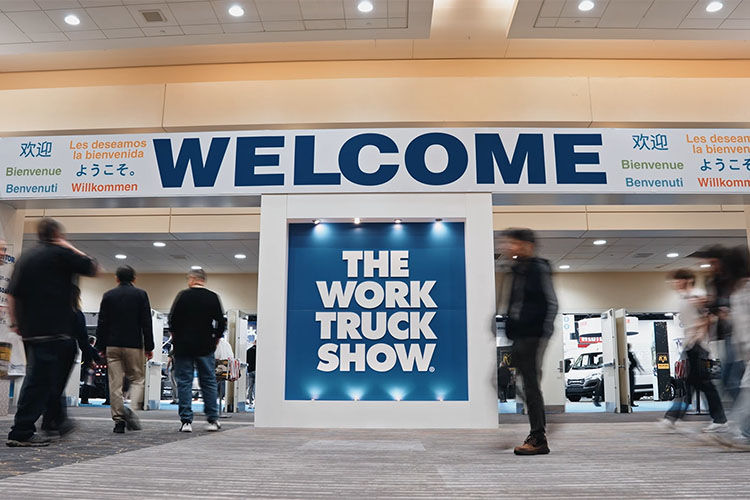 Work Truck Week 2026: A Shift You Could Feel
 Seasonal Construction Cycles and What They Mean for the Trucks Your Crews Need
 Driving Business Growth Through Financial Flexibility: How You Buy Your Truck Matters
.jpeg)


