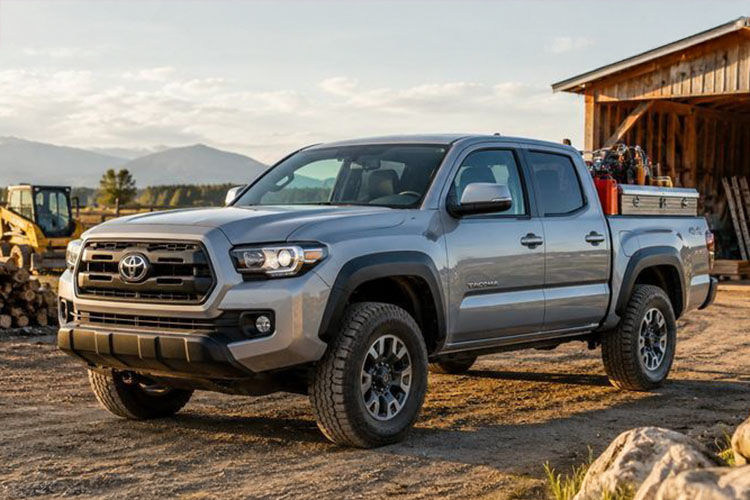
Best & Most Reliable Heavy-Duty Work Trucks in 2026
Comparing Best Heavy-Duty Work Trucks for Contractors & Fleets in 2026
Find the right heavy-duty truck by balancing extreme capability with long-term reliability and manageable operating costs. For contractors and fleet managers in 2026, three trucks dominate: Ram 3500 delivers luxury and power with 430 maximum horsepower, Ford Super Duty offers proven longevity, and Chevrolet Silverado HD provides maximum towing capacity.
Your two biggest decisions involve selecting between gas and diesel engines, then identifying which powertrains reliably cross 250,000 miles without major failures. Comvoy’s nationwide inventory of pickup trucks helps you filter by vocation, engine type, and upfit to match real workloads and avoid costly mistakes.
Ram 3500 Vs. Ford Super Duty Vs. Silverado HD: Which HD Truck Wins In 2026?
The best heavy-duty truck delivers the towing and payload you need without breaking down. For 2026, three trucks dominate the market, each excelling in different areas: Ram 3500 for comfort and power, Ford Super Duty for proven durability, and Chevrolet Silverado HD for maximum towing capacity.
Your choice between a gas or diesel engine directly affects upfront cost, ongoing maintenance, and how long your truck will last. Comvoy’s nationwide inventory of pickup trucks helps you filter by engine type and job requirements to find the right match.
Each heavy-duty pickup brings different strengths to your worksite:
Truck Model | Key Strength | Best For | Engine Options |
All-Around Capability & Longevity | Contractors who need a proven workhorse | 6.8L Gas V8, 7.3L Gas V8, 6.7L Power Stroke Diesel | |
Comfort & Refinement | Long-haul drivers who want a smooth ride | 6.4L HEMI Gas V8, 6.7L Cummins Diesel | |
Maximum Towing Capacity | Heavy equipment hauling | 6.6L Gas V8, 6.6L Duramax Diesel |
The Silverado HD leads in pure pulling power with 36,000 max trailering capacity when properly equipped.
Contractors consistently choose Ford for durability, Ram for driver comfort, and Chevy or GMC for pure pulling power. The right choice ultimately depends on whether you prioritize longevity, comfort, or towing capacity for your specific work demands. You should also know whether you’re looking for the best 1/2-ton truck or a larger one.
The Engine Decision That Matters Most
Your engine choice affects everything from purchase price to long-term reliability. Each manufacturer offers both gas and diesel options designed for different work demands, making this decision crucial to your truck’s performance and cost of ownership.
Ford 7.3L Gas vs 6.7L Power Stroke
Ford’s 7.3L “Godzilla” gas V8 competes directly with the 6.7L Power Stroke diesel. While the gas engine costs less upfront and has simpler maintenance requirements, the diesel provides more torque and better fuel efficiency when towing heavy loads.
Choose gas if you tow lighter loads or want to avoid diesel complexity. Alternatively, choose diesel if you tow heavy equipment daily or drive high annual miles where fuel savings matter most.
GM 6.6L Gas vs Duramax
General Motors pairs its 6.6L gas V8 with the proven 6.6L Duramax diesel. The Duramax delivers 975 lb.-ft. torque and comes with an Allison automatic transmission, which is specifically built for commercial use and heavy-duty applications.
The gas engine works well for intermittent hauling at a lower cost. In contrast, the Duramax diesel excels with consistent heavy loads and offers impressive towing power for demanding work.
Ram Cummins 6.7L vs Hemi
Ram offers the legendary 6.7L Cummins diesel against the capable 6.4L HEMI V8. The Cummins is known for reaching high mileage with minimal problems, while the HEMI provides good power at a lower initial cost.
Choose the HEMI for mixed-use driving where diesel costs aren’t justified. However, choose the Cummins if you need maximum durability and torque for demanding work conditions.
Gas vs Diesel for Heavy-Duty: When Each Makes Sense
Diesel engines add several thousand dollars to your truck’s price while also requiring Diesel Exhaust Fluid (DEF) and complex emissions systems that can need expensive repairs.3 Since 2010, nearly all on-road diesel trucks have used DEF as part of selective catalytic reduction systems to reduce emissions.1 Gas engines, or “gassers,” have simpler maintenance and lower repair costs, though diesel engines often provide better fuel efficiency and more torque for heavy towing.
Here’s when each makes financial sense:
- Choose diesel for: High-mileage fleets doing consistent heavy towing. The superior torque and fuel economy under load can justify the higher costs.
- Choose gas for: Lower annual mileage, lighter towing, or tighter budgets. Gas engines are often more economical for local contractors with varied daily tasks.
Comvoy’s filters let you search by engine type to compare available options in your area, making it easier to find the right powertrain for your needs.
Which Heavy-Duty Trucks Actually Last 250,000+ Miles
Reaching high mileage means better return on investment for your business. The most reliable heavy-duty truck models consistently appear in longevity studies, and research shows that four pickup trucks are well above average for reaching 200,000+ miles, though specific engine and transmission combinations determine actual durability.
Ford Super Duty and GMC Sierra HD often lead reliability rankings. However, the powertrain you choose matters more than the brand name on the grille.
These powertrains are known for longevity:
- Cummins Diesel (Ram): The 6.7L Cummins is legendary for durability and can reach very high mileage with proper care.
- Power Stroke Diesel (Ford): Post-2011 6.7L engines have strong reliability records.
- Duramax Diesel (GM): LML generation (2011-2016) and newer engines perform well, especially with Allison transmissions.
When buying used, target these model years: Ford 2017+ with 10-speed transmission, Ram 2019+ with platform updates, and GM 2020+ with updated Duramax. Avoid early emissions-era diesels (2008-2010) from any brand due to DPF and EGR problems that can cause expensive downtime.
Towing and Payload: Real Numbers You Can Actually Use
The advertised maximum towing capacity is often misleading since that number assumes ideal conditions and doesn’t account for your crew, tools, or fuel weight. Every option you add reduces payload capacity, with diesel engines, four-wheel drive, crew cabs, and luxury features all subtracting from what you can legally carry.
Always check the door sticker for actual payload capacity rather than relying on marketing materials. Calculate your total weight including trailer tongue weight to avoid exceeding the truck’s GVWR, which can lead to safety issues and legal problems. Understanding different trailer types helps match your truck to your equipment needs.
Choose between single rear wheels (SRW) and dual rear wheels (DRW) based on your typical load requirements. DRW provides more stability for heavy gooseneck or fifth-wheel trailers but costs more and affects ride quality when unloaded.
Chassis Cab vs Pickup: Which Configuration Fits Your Work
You can buy heavy-duty trucks as traditional pickups or chassis cabs, and this choice depends entirely on your intended use. A chassis cab comes with only a cab and bare frame rails behind it, allowing custom body installation like service bodies, dump beds, or flatbeds.
Choose a chassis cab when you need specialized equipment that exceeds pickup bed capabilities. These trucks typically offer higher GVWR and better upfit compatibility for commercial applications.
Choose a pickup for mixed-use hauling, trailer towing, or equipment that fits standard beds since they’re versatile and ready to work immediately. Comvoy’s inventory includes pre-upfitted service trucks and flatbed trucks to reduce your wait time. While the versatility of pickup trucks is clear, a cab and chassis offers ultimate customization for specialized work.
Matching a Heavy-Duty Truck to Your Work Type
The best heavy-duty truck depends on your specific job requirements since different vocations need different truck configurations. Match your truck to your primary work type for optimal performance and cost efficiency:
- Heavy Equipment Hauling: Choose dual rear wheels, diesel engine, and max towing package. Chevrolet Silverado 3500HD and GMC Sierra 3500HD lead in towing capacity.
- Service Body Applications: Select chassis cab with diesel for PTO equipment like cranes or compressors. Ford and Ram have extensive upfitter networks.
- Daily Fleet Use: Consider gas engines for lower operating costs and crew cabs for multiple workers. Ram 2500 offers exceptional ride comfort.
- General Contracting: The best 3/4 ton pickup like Ford F-250 or Ram 2500 with gas provides good capability without 1-ton costs.
Browse contractor trucks to find work-ready options for any job requirement.
Common Pitfalls When Buying Heavy-Duty Trucks
Avoid these expensive mistakes when buying your next work truck. First, research the specific model year for known emissions system problems, especially on used diesel trucks that may have hidden maintenance issues.
Don’t miscalculate payload capacity since many buyers focus only on towing and forget that diesel engines, 4×4 systems, and crew cabs reduce carrying capacity. Always verify payload on the door sticker rather than trusting advertised numbers.
Ensure upfit compatibility before ordering custom bodies since not all frames handle heavy equipment like cranes, and you need proper electrical prep packages. Follow these key buying considerations to avoid costly mistakes that can sideline your business.
When to Choose HD Over 3/4 Ton (and Vice Versa)
The difference between 3/4-ton (F-250/2500) and 1-ton (F-350/3500) trucks comes down to rear axle, springs, and frame strength. This results in higher GVWR and payload for 1-ton trucks, but also higher costs and a stiffer ride.
Choose 1-ton when you consistently tow over 15,000 pounds, need dual rear wheel stability, or install heavy upfit bodies. Choose 3/4-ton for moderate towing needs, better ride quality, and lower costs that still handle most contracting work.
Don’t overbuy capability you won’t use since this wastes money on purchase price, fuel, and maintenance. Calculate your actual needs and choose the lowest class that safely meets them for the best value.
Find the Right Heavy-Duty Truck on Comvoy
The right heavy-duty truck matches your workload, engine preference, and body configuration needs. Whether you prioritize towing capacity, reliability, or driver comfort depends on your specific business requirements and daily use patterns. This also applies to finding the most reliable box truck in the market.
Comvoy’s nationwide inventory lets you filter by vocation, engine type, and upfit brand to find exactly what you need. Our unbiased, transparent listings provide comprehensive vehicle specifications so you can match trucks to jobs without guesswork. Find the right truck, in the right place, at the right time® to keep your operations moving efficiently.
Shop for the best heavy-duty trucks now!
Sources:
- US Environmental Protection Agency. Diesel Exhaust Fluid. https://www.epa.gov/regulations-emissions-vehicles-and-engines/diesel-exhaust-fluid#background
- iSeeCars. The Longest-Lasting Cars Over 200,000 Miles – 2017 Study Shows SUVs Dominate. https://www.iseecars.com/longest-lasting-cars-study
- ScienceDirect. Emission control and carbon capture from diesel generators and engines: A decade-long perspective. sciencedirect.com/science/article/pii/S2772656825000193?__cf_chl_tk=y4zWxjQhQf2tFd_iNtQneeOfH0Y32uc1sO2_CWfrc44-1768913096-1.0.1.1-LBd2K.yzZeKqr4X9F_sXt3mjnD7Kn2RguyV9I4dJ0bM