


America’s 250th Anniversary—and the Vehicles That Built a Nation

America’s 250th Anniversary—and the Vehicles That Built a Nation
As the United States marks its 250th anniversary, it’s worth noting that for every milestone in our nation’s history, a work vehicle was in the background, hauling the load, connecting communities, or enabling the next leap forward. America didn’t just grow through ideas, ambition, or opportunity alone. It grew because people could move materials, tools, food, equipment, and themselves.
This July 4th, we celebrate our nation’s founding, the ingenuity of the workers who helped build it, and the grit of the vehicles they used with this brief history of commercial transportation.
1776–1820: Wagons and the First American Supply Chains
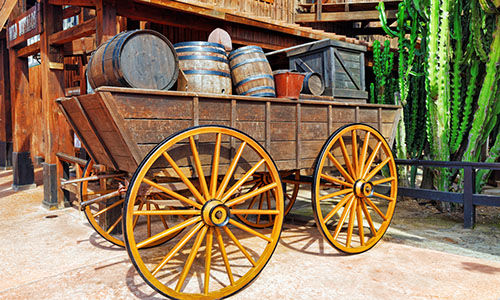
In the early years of the republic, the buckboard and Conestoga wagons were the backbone of American commerce. Farmers, tradespeople, and military units relied on these sturdy wooden haulers to move goods across rough terrain. They were the first true “commercial vehicles,” enabling trade between towns and supporting the young nation’s growth.
These wagons didn’t just carry freight; they carried the promise of expansion.
1820–1860: Stagecoaches, Canal Boats, and the Rise of Routes

As the country expanded, so did its transportation networks. Stagecoaches delivered mail and passengers over vast distances, while canal boats moved heavy freight more efficiently than ever before. These were the first organized logistics systems in America, complete with scheduled routes, contracted operators, and early versions of fleet management.
Commerce grew into a reliable regional network, keeping Westward expansion connected to established Eastern businesses.
1860–1900: Railroads and Specialized Horse‑Drawn Work Vehicles
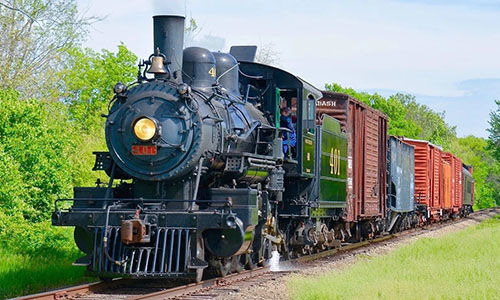
The railroad era reshaped commercial vehicles and transformed the nation. Cities also depended on specialized horse‑drawn wagons—milk, ice, and delivery wagons—to handle the “last mile” long before the term existed. These were vocational vehicles built for specific trades, mirroring the specialization we see in today’s service bodies and upfits.
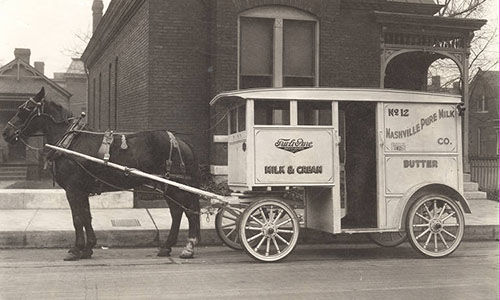
America was industrializing, and its work vehicles were evolving right alongside it.
1900–1930: The Birth of the Work Truck
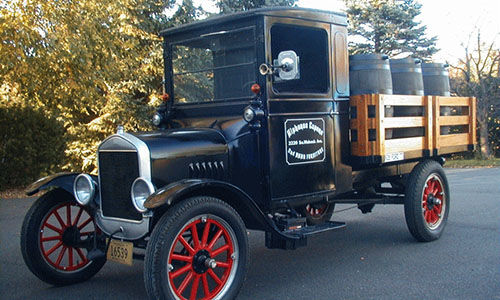
The introduction of the Ford Model TT in 1917 marked a turning point. For the first time, businesses could purchase a mass‑produced truck designed specifically for hauling. Early dump bodies, stake beds, and delivery vans soon followed, giving rise to the modern commercial vehicle industry.
Fleets became formal business units. Upfitters emerged. And the American work truck became a symbol of productivity and progress.
1930–1950: WWII Production and Postwar Construction
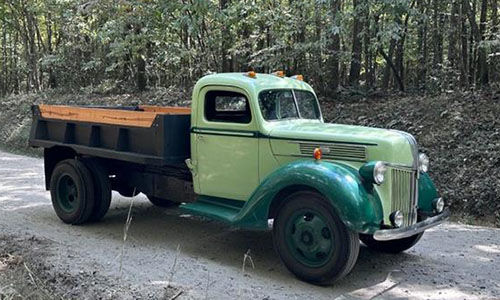
During World War II, American manufacturing scaled to unprecedented levels. Heavy trucks, ambulances, and utility vehicles supported the war effort at home and abroad. After the war, those same factories fueled a construction boom that reshaped the nation—roads, bridges, suburbs, and new industries all depended on commercial vehicles to get the job done.
This was the era when the work truck became essential infrastructure.
1950–1980: Highways, Suburbs, and the Golden Age of Fleets
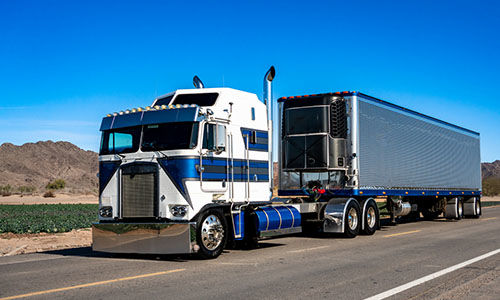
With the Interstate Highway System came new opportunities and new demands. Refrigerated trucks expanded food distribution. Step vans supported the rise of retail and parcel delivery. Utility fleets grew to support America’s rapidly expanding electrical and telecommunications networks.
Work vehicles and fleet management weren’t just supporting growth; they were enabling it.
1980–2010: Digital Logistics and the Modern Fleet

The late 20th century brought telematics, GPS, and data‑driven fleet management. Parcel carriers, telecom fleets, and service companies optimized routes, reduced downtime, and improved safety. Commercial vehicles became smarter, more efficient, and more specialized than ever before.
The work truck had officially entered the information age.
2010–2026: Electrification, Autonomy, and the New Frontier
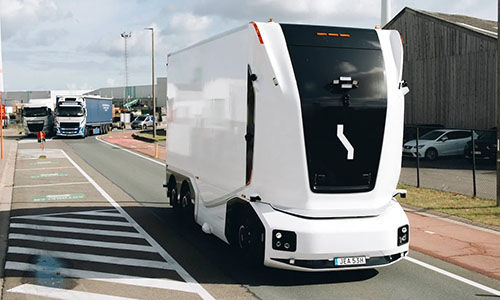
Today, America’s commercial vehicles are undergoing another transformation. Electric vans and trucks are reshaping last‑mile delivery. Autonomous vehicle pilots are testing new ways to move goods. And aerospace companies, from NASA to SpaceX, are using specialized haulers to support missions that reach beyond Earth.
The same spirit that once pushed wagons westward is now pushing rockets skyward.
Looking Ahead: The Next 250 Years
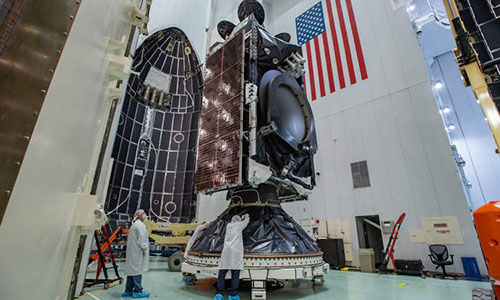
If the past 250 years have shown us anything, it’s that progress requires movement—and movement requires the right vehicle for the job. As America looks toward a future defined by clean energy, advanced manufacturing, and exploration, commercial vehicles will continue to play a central role.
From buckboards to battery‑electric vans, from dirt trails to launch pads, work vehicles have always been part of America’s story. And they’ll be there for whatever comes next.
 About the author: Ryan E. Day is a communications specialist at Work Truck Solutions, where he turns complex ideas into engaging content that drives business impact across industries and platforms. With 13 years of experience in B2B content marketing, Ryan specializes in storytelling, strategic messaging, and digital optimization.
Ryan's work has been featured in Comvoy, Quality Digest, Youtube, and Amazon Kindle.
Connect with Ryan on his Linkedin page.
 World Class Soccer In 2026: The Commercial Vehicles Behind the Events
 Work Truck Week 2026: A Shift You Could Feel
 Seasonal Construction Cycles and What They Mean for the Trucks Your Crews Need
 Best Gifts for Truck Drivers and Truck Owners (2025 Guide)
 2026 Commercial Trucks and Vans: What’s New from Ford, GM, and Ram


